Efficiency of Machines: Where the Energy Goes
A ratio with no unit and no mercy
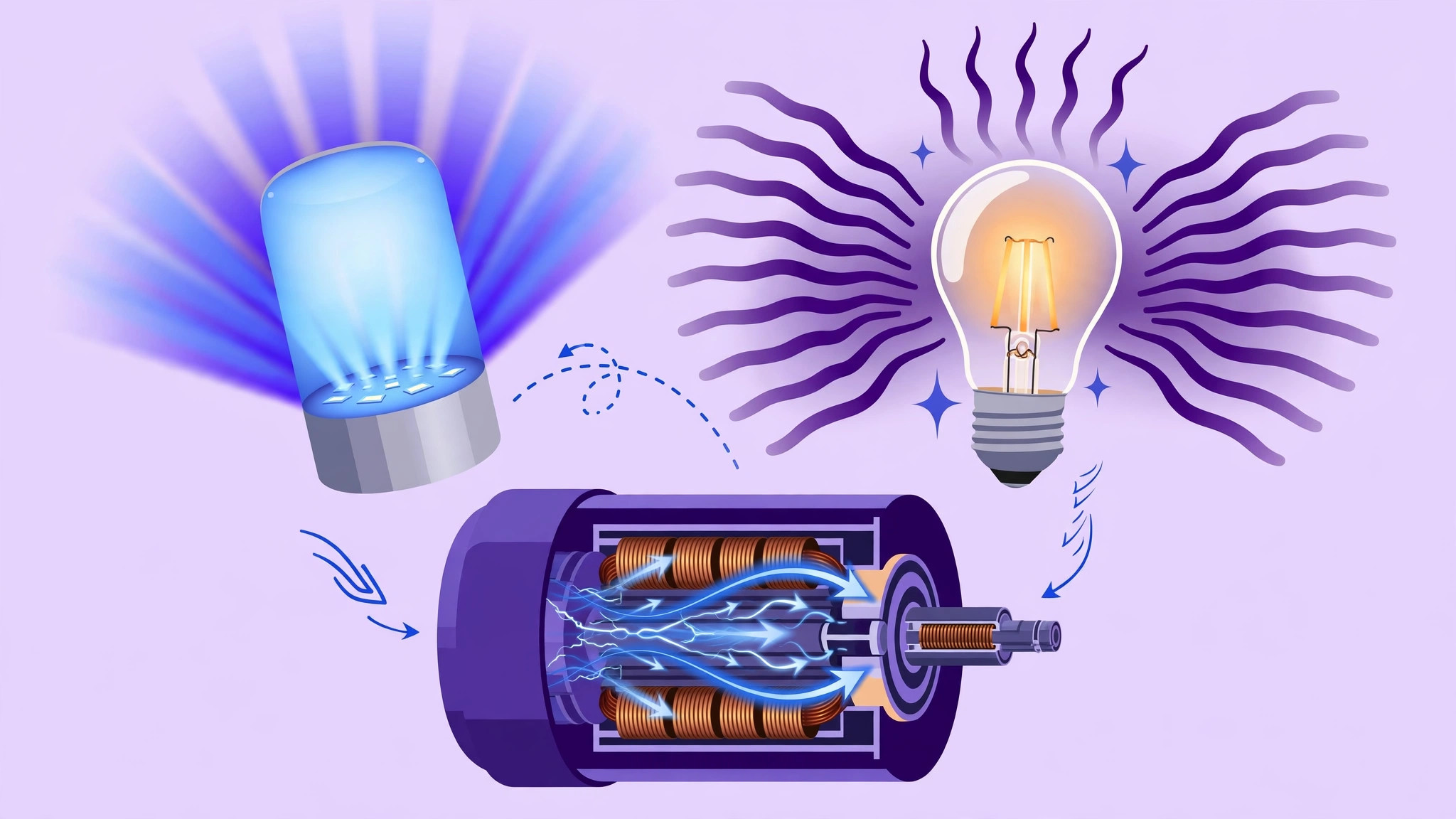
Efficiency is the useful energy output of a device divided by its total energy input, usually expressed as a percentage. It has no unit because it is a ratio of like quantities, and it has a hard ceiling: the conservation of energy forbids a value above one hundred percent, so any calculation that produces one has made an error, a reliable self check. Typical figures sketch the landscape. A modern LED lamp converts perhaps a third of its input to light, the rest to heat; its filament ancestor managed about a twentieth. A car engine delivers around a quarter to a third of its fuel's energy to the wheels. A well designed electric motor exceeds ninety percent. The efficiency calculator on this site returns the percentage and the wasted amount side by side, because the waste, not the percentage, is usually what engineers are paid to hunt.
Where the missing energy goes
Energy is never destroyed, so inefficiency is a story of diversion. Friction converts motion to heat in bearings and tyres. Electrical resistance heats wires and windings. Engines exhaust hot gas that still holds energy the cycle could not extract, and thermodynamics, through the second law, guarantees that some of that loss is not bad engineering but the price of running a heat engine between two temperatures at all. Sound, vibration and light in unwanted places take their smaller cuts. Auditing a machine means following each stream: measure the input, meter the useful output, and assign the difference among the loss channels until the books balance. The biggest channel is the first target, which is why car development spent decades on engine friction and aerodynamics before it polished the smaller leaks.
Efficiency is not the whole verdict
A device can be inefficient and still be the right tool: a rocket wastes most of its energy heating exhaust, yet nothing else reaches orbit. An incandescent bulb in a chicken coop is a heater that happens to glow, and judged as a heater it is nearly perfectly efficient. The definition of useful is doing quiet work in every efficiency figure, and changing it changes the verdict without changing the device. Combined heat and power stations exploit exactly this, selling the waste heat of generation to nearby buildings and lifting total usefulness past eighty percent. Read any efficiency claim by asking three questions: useful for what, measured over what cycle, and compared with which alternative. The number alone is a headline; those answers are the article.
Try it: Efficiency Calculator
No machine is perfect. Efficiency compares the useful energy a device delivers with the total energy put into it.
Open the calculator