Physics guides
52 guides, each with a worked idea and a calculator to try it on.

How Velocity Works: Speed With a Direction
Velocity tells you how fast something moves and in which direction. How it differs from speed, how to work it out, and how to read it on a journey.
Read the guide
Acceleration Explained Simply
Acceleration is the rate at which velocity changes. What the number means, why slowing down counts, and how to calculate it without tripping over the units.
Read the guide
Newton's First Law: The Law of Inertia
Newton's first law: things keep doing what they are doing unless a force interferes. Inertia, seatbelts, and why a tablecloth trick works.
Read the guide
Newton's Second Law in Real Life
Force equals mass times acceleration, the hardest working equation in physics. How to use it, and what it predicts about trucks, rockets and falling feathers.
Read the guide
Newton's Third Law: Action and Reaction
Every action has an equal and opposite reaction. Why the forces act on different objects, how rockets fly, and the walking puzzle everyone gets wrong.
Read the guide
Friction: Types, Uses and Why Brakes Work
Static, kinetic, rolling and fluid friction: where grip comes from, why brakes work, and when friction is the hero rather than the villain.
Read the guide
Momentum Explained: The Quantity of Motion
Momentum is mass times velocity, and the universe keeps its total unchanged in collisions. How to calculate it and why it matters more than energy in a crash.
Read the guide
Impulse and Crumple Zones: Buying Time in a Crash
Impulse is force multiplied by time, and stretching the time is how airbags, crumple zones and bending your knees turn lethal stops into survivable ones.
Read the guide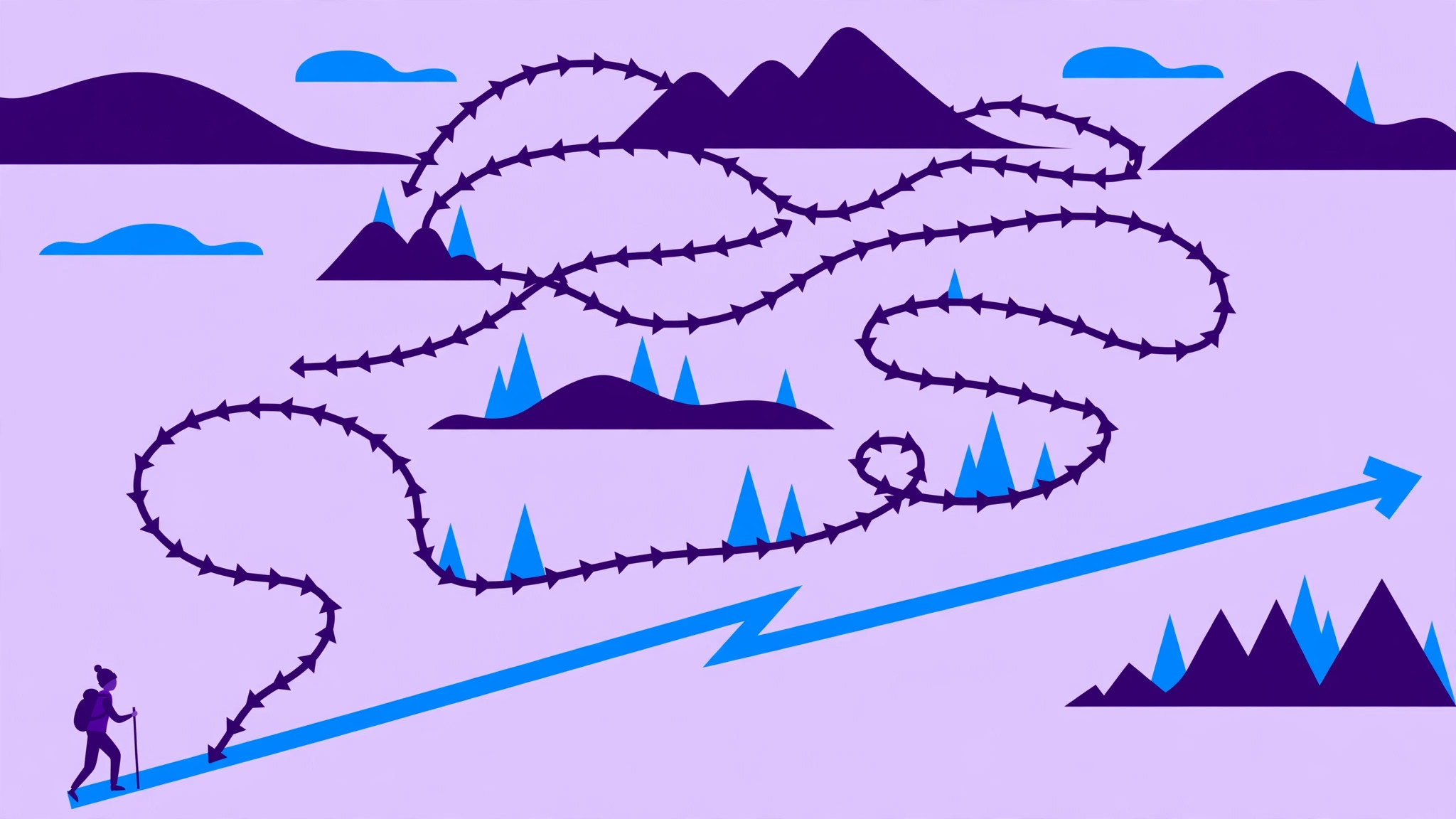
Vectors vs Scalars: Direction Is Half the Story
Some quantities need only a size; others need a size and a direction. Scalars, vectors, and why adding them follows different rules.
Read the guide
Free Fall: Everything Falls Together
Near Earth's surface everything falls with the same acceleration, 9.81 metres per second squared. The equations of free fall and the feather that proved it.
Read the guide
Terminal Velocity: When Falling Stops Accelerating
A falling object speeds up until air resistance balances its weight, then falls at a constant terminal velocity. Skydivers, raindrops and cats.
Read the guide
Torque and Balance: The Turning Effect
Torque is the turning effect of a force. Levers, spanners, seesaws and the principle of moments that keeps cranes upright and doors honest.
Read the guide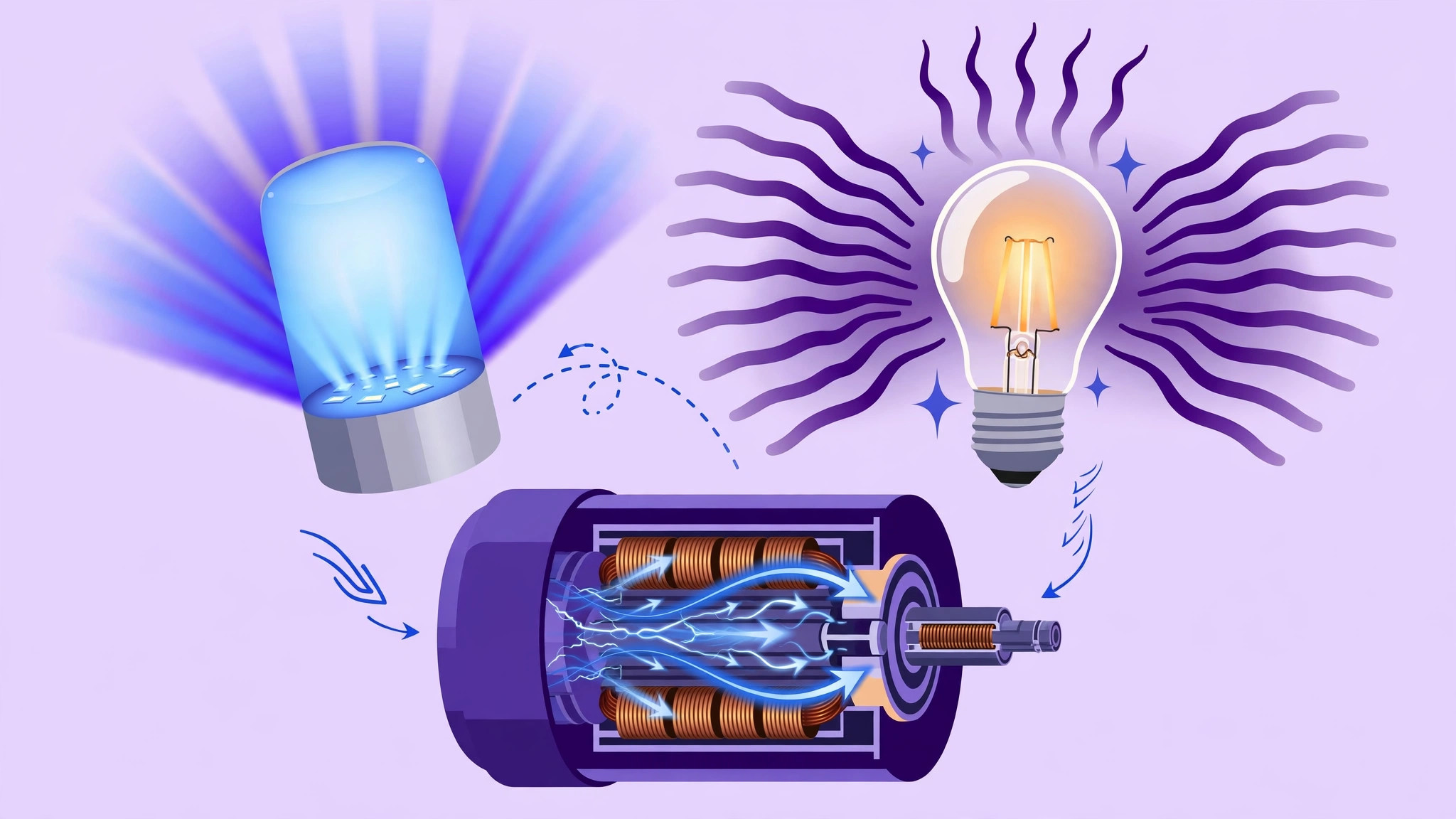
Efficiency of Machines: Where the Energy Goes
Efficiency measures how much of what you put in comes out where you wanted it. Why nothing reaches one hundred percent, and where the rest goes.
Read the guide
Orbits and Escape Velocity: Falling and Leaving
To orbit is to fall and keep missing; to escape is to never fall back. Orbital speed, escape velocity, and why both depend on where you start.
Read the guide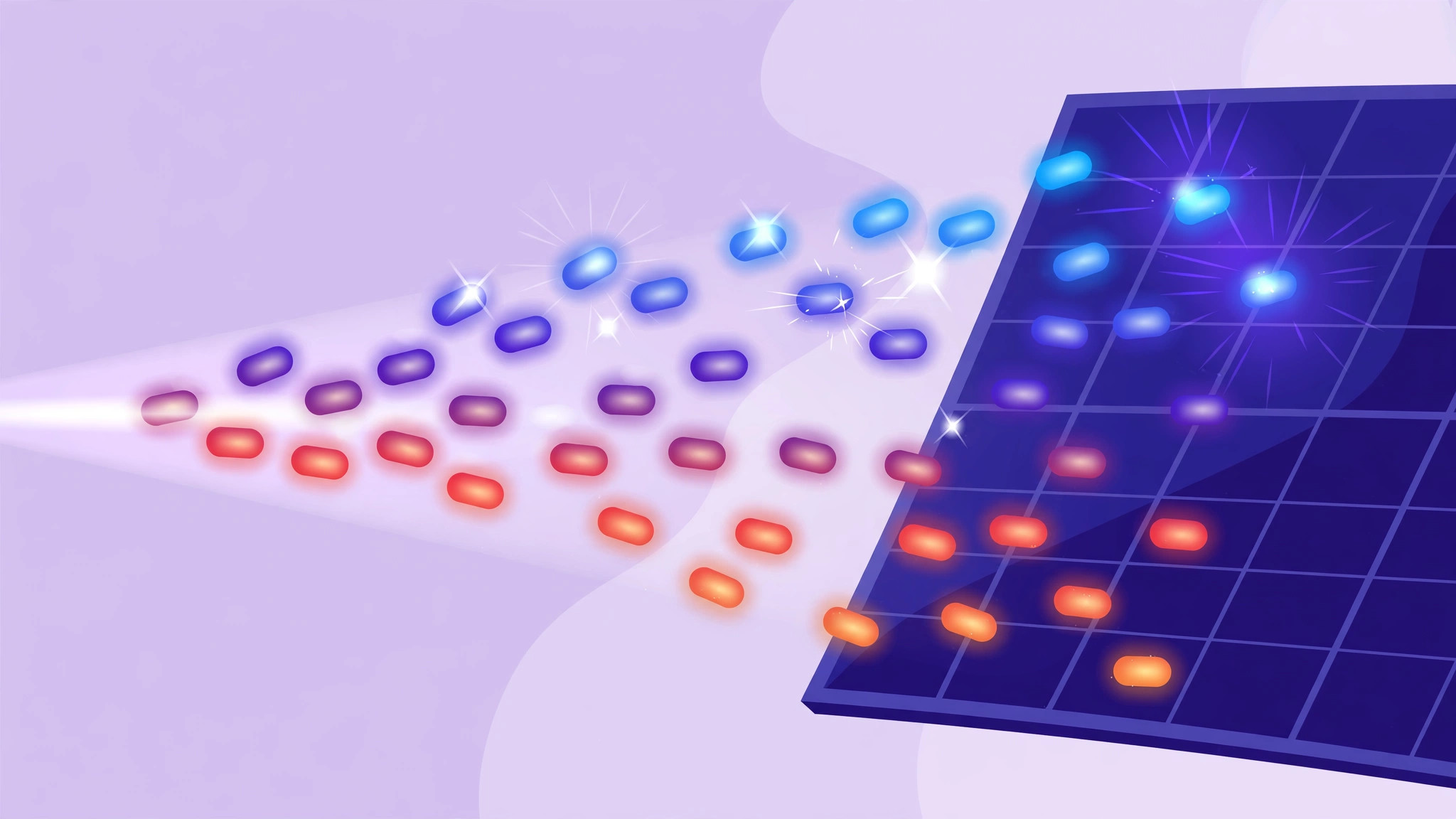
Photon Energy: Light in Packets
Light energy comes in packets called photons, each worth h times its frequency. Blue photons outgun red ones, and that fact runs lasers, sunburn and solar cells.
Read the guide
Stress, Strain and Young's Modulus
Stress is force per area, strain is stretch per length, and their ratio is Young's modulus, the stiffness number engineers design with.
Read the guide
Centripetal or Centrifugal: Settling the Argument
Is centrifugal force real? Why you feel flung outward on a roundabout when physics says the acceleration points inward, and how engineers use the idea anyway.
Read the guide
Springs and Elastic Energy: A Visible Battery
A stretched spring is stored work. Elastic potential energy, why it goes with the square of the stretch, and where springs spend it.
Read the guide
The Inverse Square Law: Geometry With Consequences
Gravity and the electric force both fade with the square of distance. Why inverse square laws appear, and what they do to planets, tides and light.
Read the guide
Measurement and Significant Figures: Honest Numbers
Every measurement carries uncertainty, and significant figures are how physics writes that honesty down. Rules, traps and the art of the sensible answer.
Read the guide
Work in Physics: Energy Changing Hands
Work in physics has a precise meaning: a force doing work as it moves something. Why carrying a heavy bag does no work on it, and how the angle changes everything.
Read the guide
Kinetic Energy: Why the Square of Speed Rules
Kinetic energy grows with the square of speed, which is why a small speed increase makes such a large difference to crashes, brakes and ballistics.
Read the guide
Potential Energy: Stored Energy in Its Many Forms
Potential energy is stored energy: height in a gravity field, stretch in a spring, charge in a battery. The forms differ, the idea is one.
Read the guide
Conservation of Energy: The Law That Never Breaks
Energy is never created or destroyed, only converted. The most trusted law in physics, and the reason perpetual motion machines always fail.
Read the guide
Power: How Fast Energy Moves
Power is how fast energy moves: watts, horsepower, climbing stairs, and why the same work can be gentle or violent depending on the time it takes.
Read the guide
Projectile Motion: Two Motions at Once
A projectile follows two simple motions at once: steady sideways drift and accelerating fall. How range, height and flight time fall out of one launch.
Read the guide
Circular Motion: Falling Toward the Centre
Moving in a circle means accelerating toward the centre, even at constant speed. Centripetal force, banked corners and why the Moon is falling.
Read the guide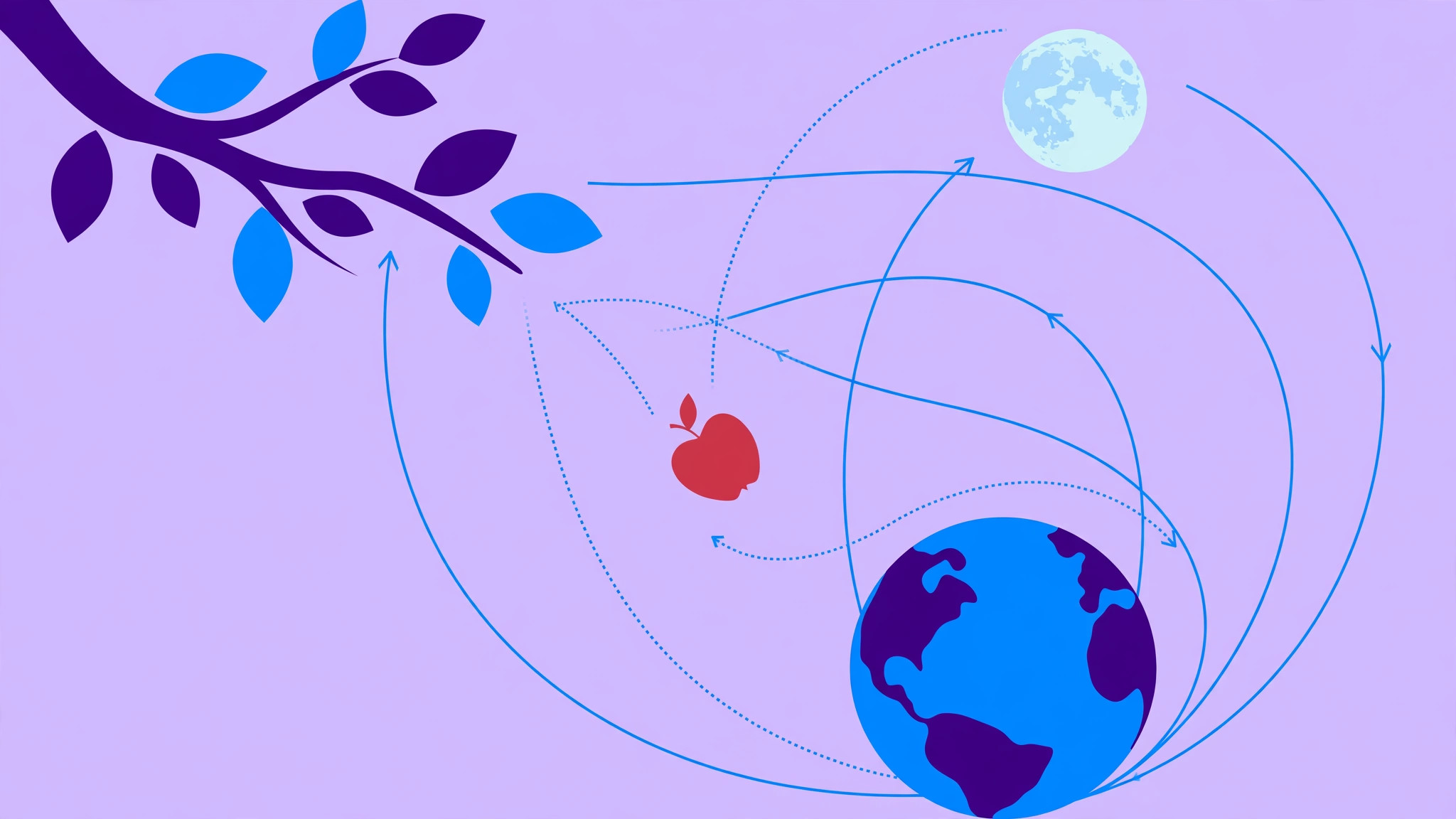
Gravity and Weight: The Pull Between Everything
Gravity pulls every mass toward every other. Weight is that pull measured on you, and it changes from planet to planet while mass does not.
Read the guide
Mass vs Weight: The Difference That Matters
Mass is how much stuff and how much inertia; weight is gravity's pull on that stuff. Same you, different planets, and why the bathroom scale lies politely.
Read the guide
Density Explained: Packed Matter and Floating Ships
Density is mass packed into volume. Why ships float, icebergs hide, and how a crown once exposed a dishonest goldsmith.
Read the guide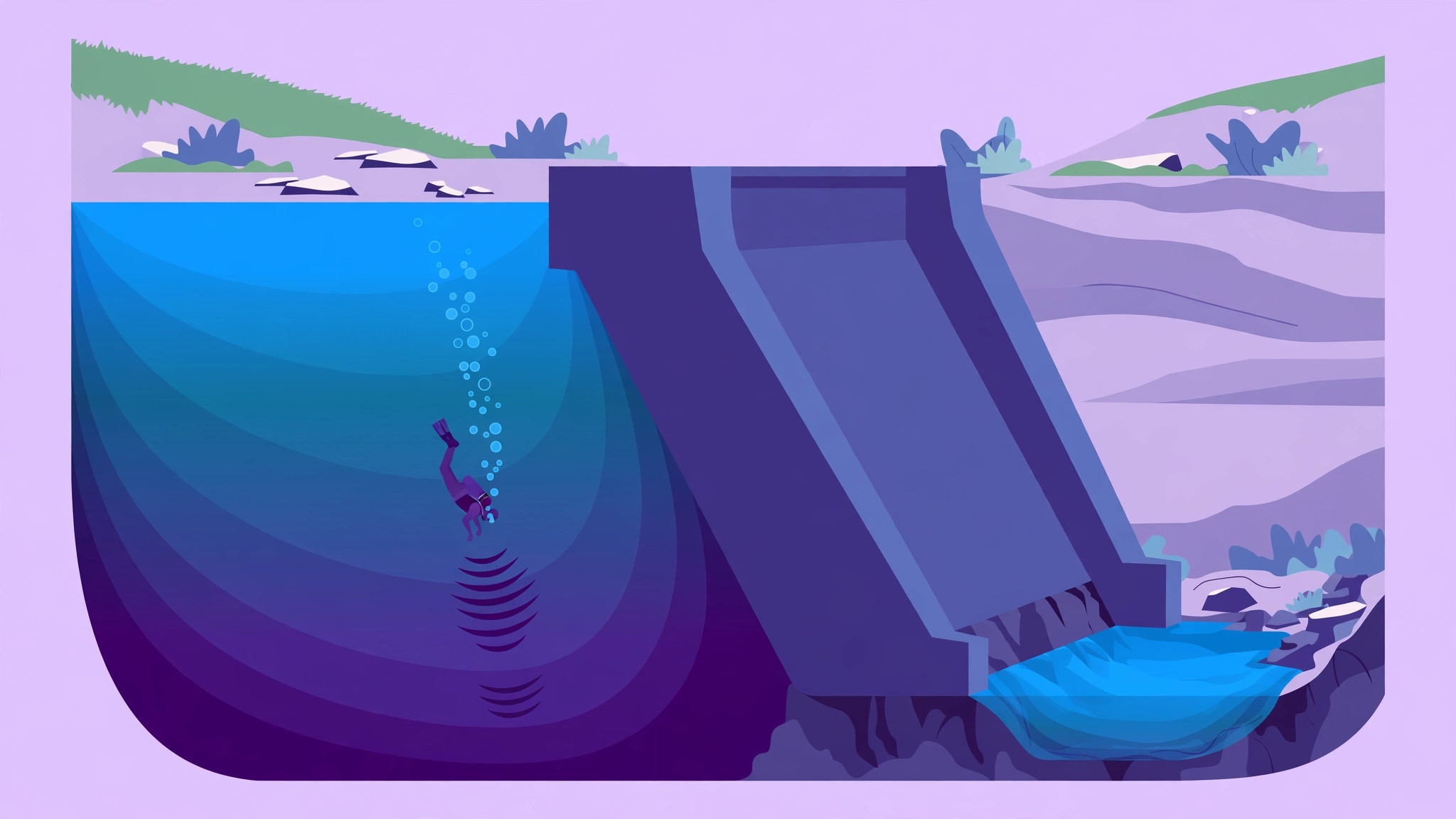
Pressure in Fluids: Deeper, Stronger, Everywhere
Pressure in a liquid grows with depth, spreads equally in all directions, and explains dams, divers' ears and hydraulic machines.
Read the guide
Buoyancy and Archimedes: Why Things Float
Archimedes' principle explains floating, sinking and everything in between: upthrust equals the weight of displaced fluid, and submarines steer by it.
Read the guide
Hooke's Law and Springs: Proportional Pushback
Springs push back in proportion to how far they are stretched. Hooke's law, the spring constant, elastic limits and the energy a spring stores.
Read the guide
Pendulum Motion: Time Kept by a String
A pendulum's period depends on its length and on gravity, and on almost nothing else. Galileo's lamp, clockmaking and measuring g with string.
Read the guide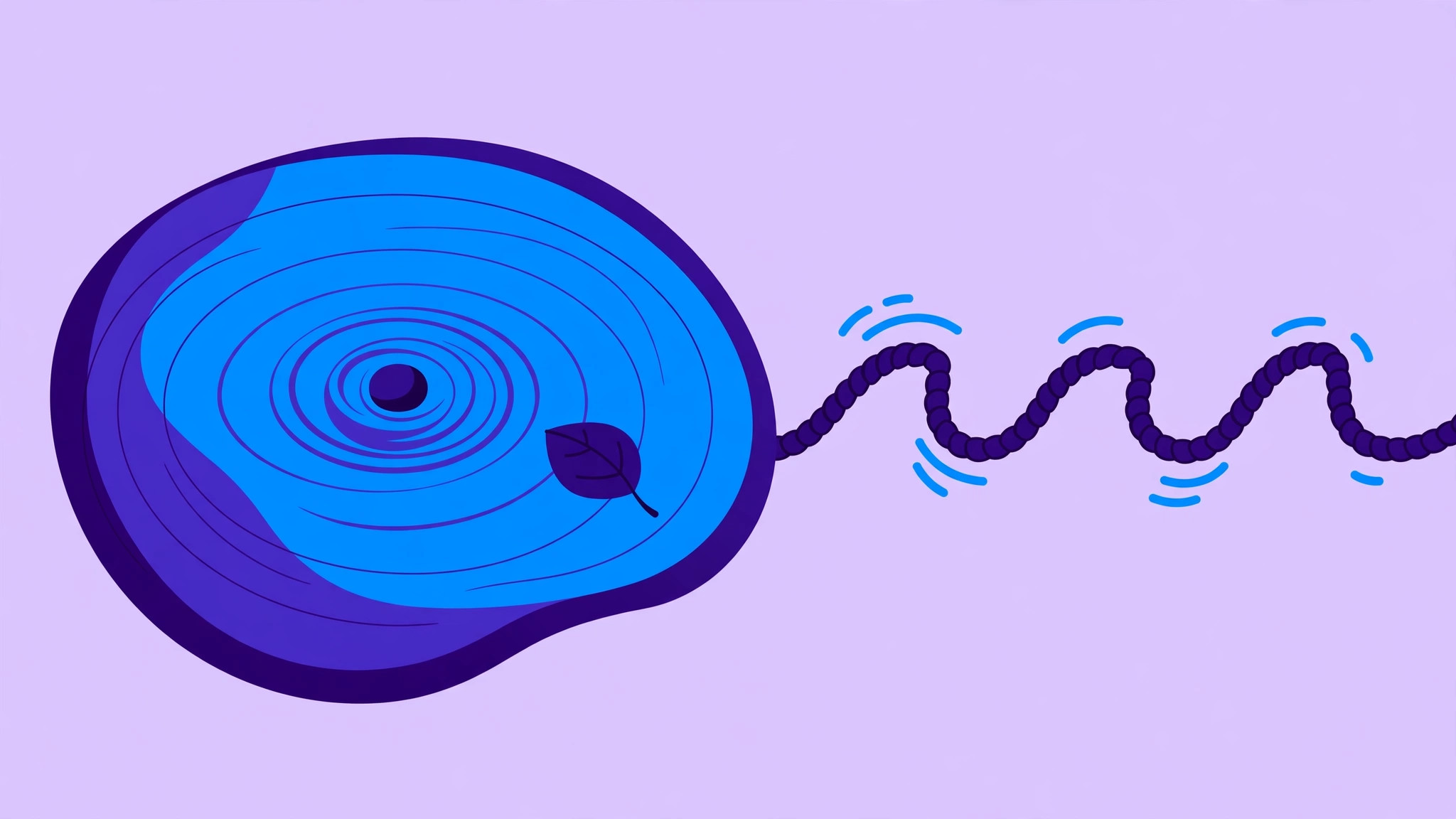
Waves: Types, Parts and Travelling Energy
Waves carry energy without carrying matter. Transverse and longitudinal waves, the parts of a wave, and why the medium mostly stays home.
Read the guide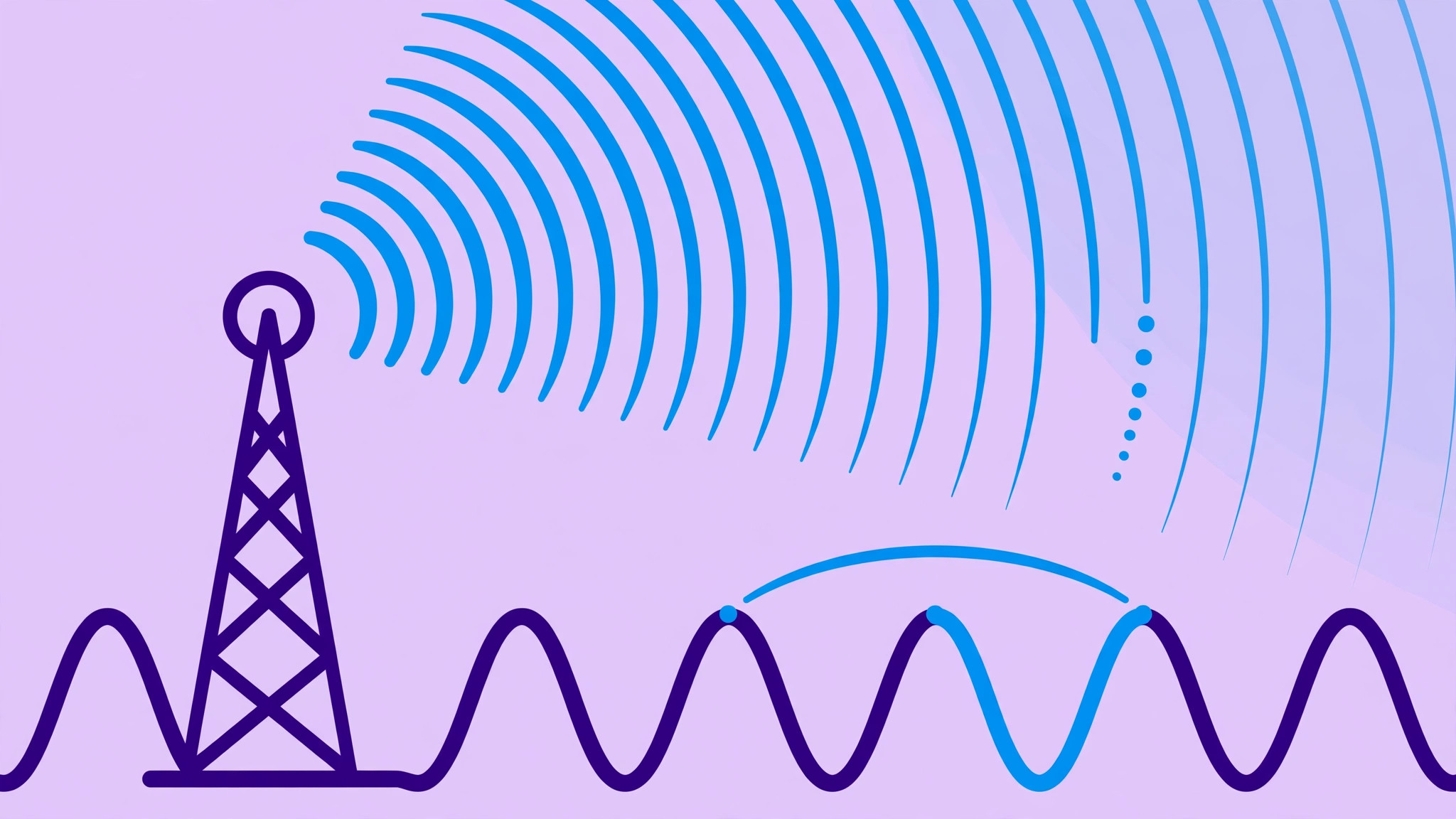
Wave Speed, Frequency and Wavelength
Wave speed equals frequency times wavelength. One equation for sound, light, water and radio, and how to use it without mixing up the three quantities.
Read the guide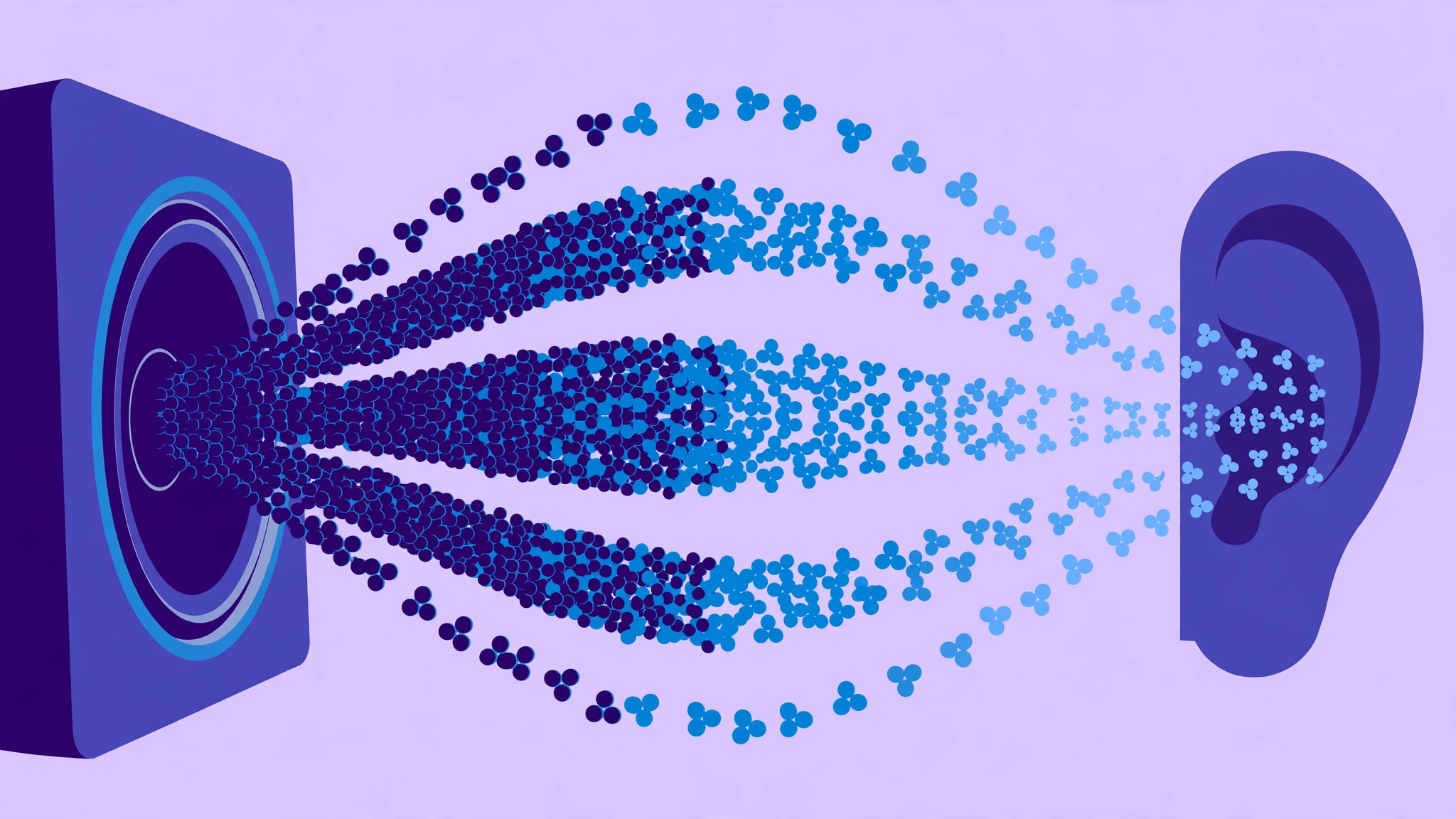
Sound Waves: Squeezed Air You Can Hear
Sound is a travelling squeeze of air. How it is made, how fast it goes, why it needs a medium, and how pitch and loudness map onto frequency and amplitude.
Read the guide
The Doppler Effect: Pitch From Motion
The pitch of a siren rises as it approaches and drops as it passes. The Doppler effect explained, from ambulances to the expanding universe.
Read the guide
Reflection and Refraction: Light at Borders
Light bounces off mirrors at equal angles and bends entering glass or water. Reflection, refraction, Snell's law and total internal reflection.
Read the guide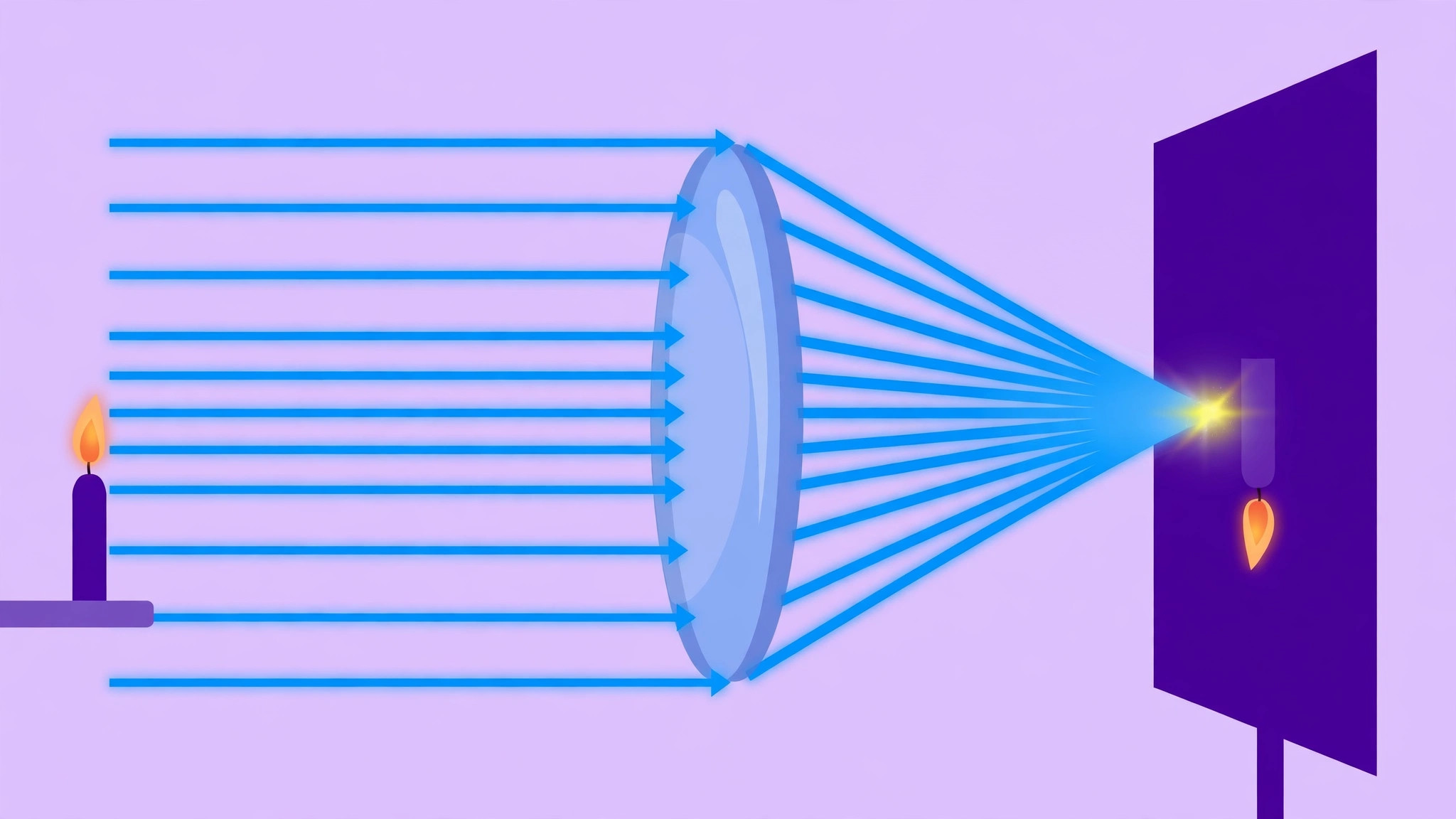
Lenses and Mirrors: Images From Bent Light
Lenses and mirrors form images by bending or bouncing light to a meeting point. Focal length, real and virtual images, and magnification explained.
Read the guide
Electric Charge and Coulomb's Law
Electric charge comes in two signs, attracts and repels by an inverse square law, and is staggeringly strong. Coulomb's law and the field it creates.
Read the guide
Electric Circuits: The Loop and Its Three Quantities
A circuit is a complete loop with a source, a path and something that uses the energy. Current, voltage and resistance given physical meanings that stick.
Read the guide
Ohm's Law Explained: Push, Flow and Resistance
Voltage equals current times resistance. What Ohm's law really claims, when it holds, when it breaks, and how to rearrange it without fear.
Read the guide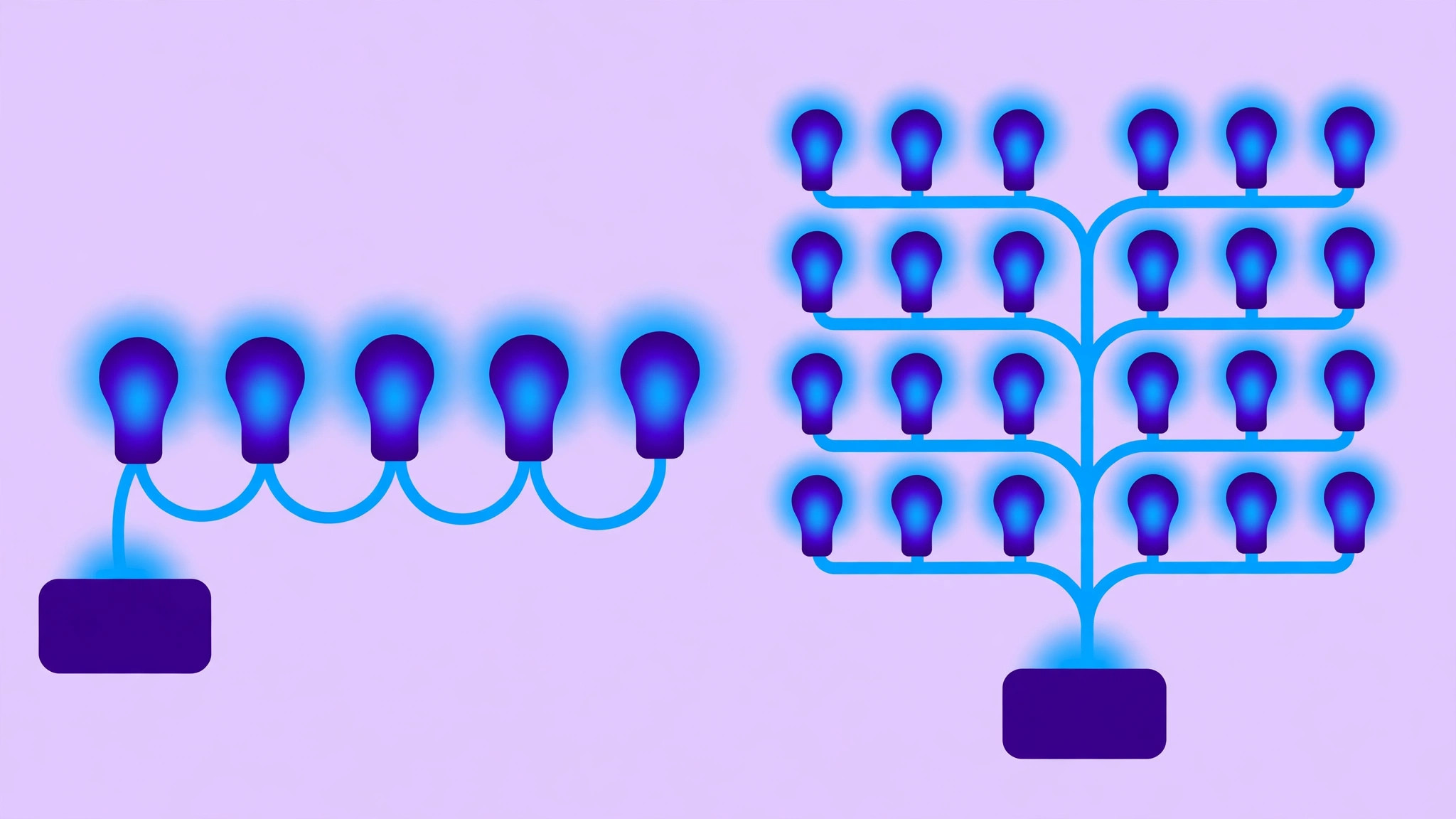
Series and Parallel: Two Ways to Wire Resistance
Resistors add in series and share in parallel. The two rules, why parallel always gives less, and how household wiring uses the difference.
Read the guide
Electrical Power: Watts, Bills and Fuses
Electrical power is voltage times current. Ratings on appliances, kilowatt hours on bills, and why a fuse is a power calculation with a breaking point.
Read the guide
Magnetism Basics: Poles, Fields and Moving Charge
Magnets push and pull without touching, Earth is one, and a moving charge makes magnetism of its own. The basics, honestly fenced where school physics stops.
Read the guide
Temperature vs Heat: The Difference That Matters
Temperature is how hot; heat is energy in transit. The distinction that dissolves a shelf of confusions, from sea breezes to why metal feels colder than wood.
Read the guide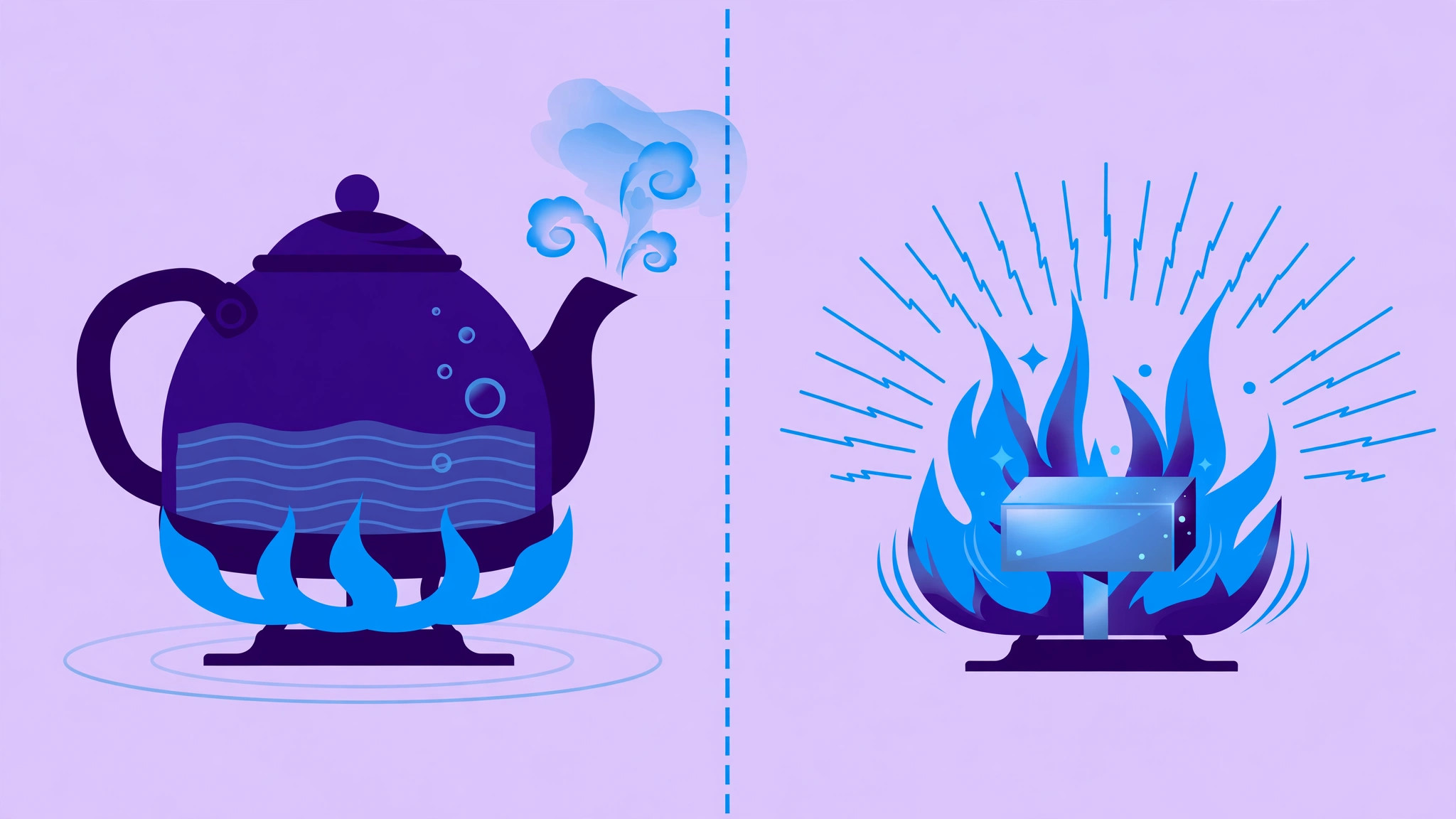
Specific Heat Capacity: The Price of a Degree
Specific heat capacity is the energy price of warming one kilogram by one degree. Why water's high price shapes climate, cooking and cooling systems.
Read the guide
The Ideal Gas Law: Four Variables, One Equation
Pressure times volume equals amount times the gas constant times temperature. The ideal gas law, where it comes from, and where it stops being true.
Read the guide
The Laws of Thermodynamics, Plainly
The laws of thermodynamics in plain terms: energy is conserved, disorder grows, heat flows downhill, and absolute zero stays out of reach.
Read the guide
SI Units: The Language Physics Speaks
The seven base units of the SI system, the prefixes that scale them, and why a shared measurement language is one of science's great inventions.
Read the guide
Unit Conversions in Physics: The Factor Method
Converting units is where physics marks are won and lost. The factor method, the classic traps, and a conversion table worth memorising.
Read the guide