Temperature vs Heat: The Difference That Matters
Two words, two different things
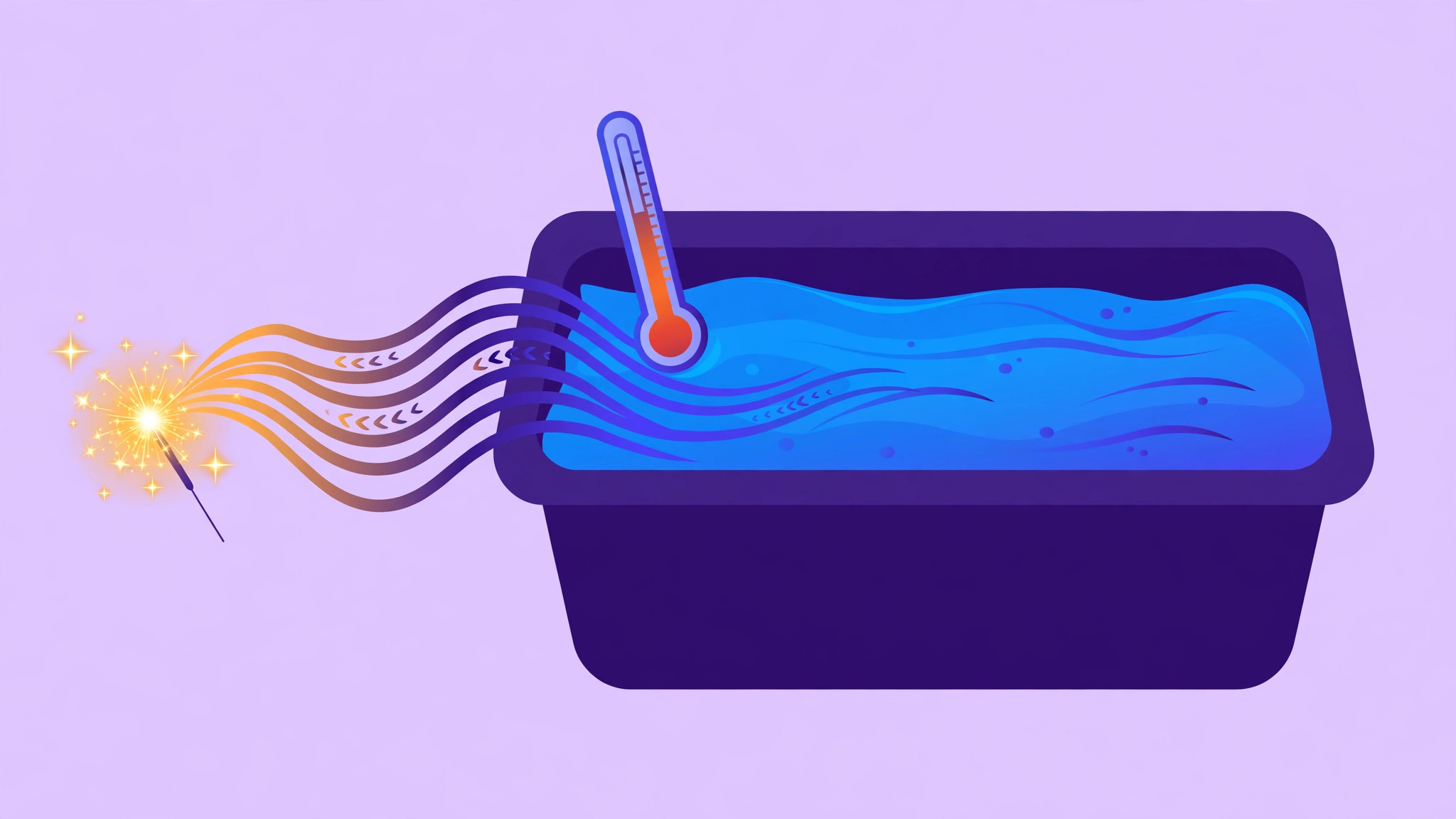
Temperature measures the average kinetic energy of the particles in a substance: how vigorously its atoms and molecules jiggle, spin and vibrate. Heat is not something an object contains; it is energy transferring from a hotter object to a cooler one because of the temperature difference. A bath of warm water holds far more internal energy than a sparkler's tip, yet the sparkler is far hotter, and it is the sparkler that burns you, because the direction and rate of heat flow follow temperature, not total energy. Physicists keep a third term for the energy an object does hold: internal energy, the sum of all its particles' kinetic and potential energies. Everyday speech scrambles all three, and most thermal confusions untangle the moment the words are separated.
Why the sea breeze blows and tiles feel cold
Materials differ in how much energy a temperature rise costs them, the subject of specific heat capacity in the next guide, and water's figure is exceptionally high. Land heats and cools faster than the sea beside it, so on a sunny day air over the land warms, expands and rises, drawing in the sea breeze; at night the pattern reverses more gently. The same difference explains why coastal climates are milder than inland ones at the same latitude. A bathroom tile and a bath mat at the same temperature feel completely different because feeling measures heat flow, not temperature: the tile conducts energy away from your foot quickly and feels cold, the mat insulates and feels warm. Your skin is a heat flow meter wearing a temperature costume, which is why wind chill, a pure flow effect, can make identical temperatures feel so different.
Scales and the absolute floor
Three scales divide the subject. Celsius anchors to water, freezing at zero and boiling at a hundred under standard pressure. Fahrenheit survives in a few countries' weather reports. Kelvin, the SI scale, starts at absolute zero, the temperature at which particles have their minimum possible energy, and uses Celsius sized steps: K = C + 273.15, the conversion the temperature converter on this site performs. Absolute zero is a floor nature enforces; temperatures below it are not cold but meaningless in the ordinary sense, and the coldest laboratory achievements approach it to within billionths of a degree without reaching it. Gas laws, radiation laws and most thermal formulas demand Kelvin, because their proportions only work from the true zero. Convert first is the oldest advice in thermal physics, and still the most ignored.
Try it: Temperature Converter
Convert a temperature between Celsius, Fahrenheit and Kelvin. Kelvin is the SI unit and starts at absolute zero.
Open the calculator