Terminal Velocity: When Falling Stops Accelerating
The balance point of a fall
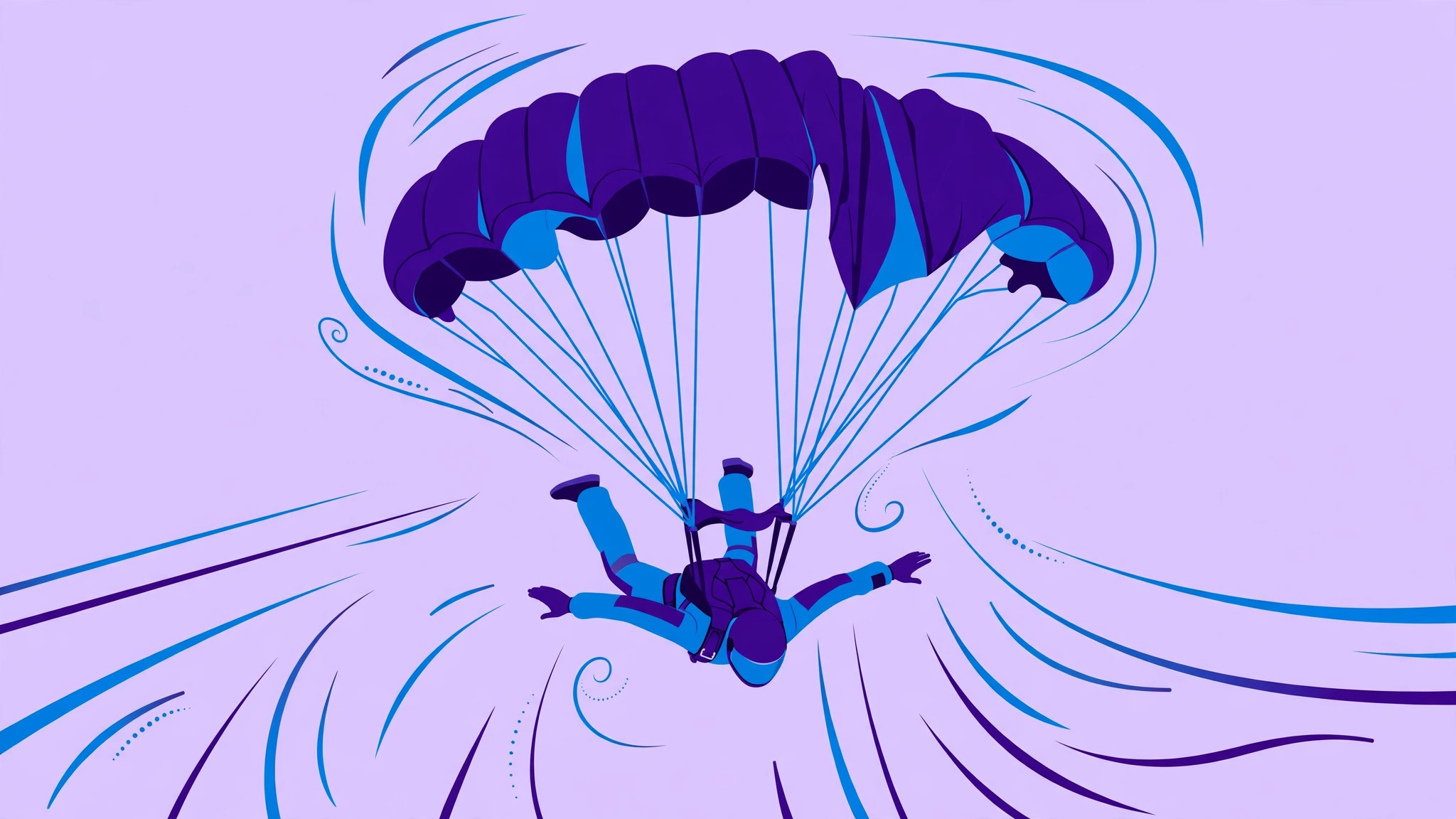
Air resistance is a force that grows with speed, roughly with its square for fast objects in air. A falling object therefore accelerates less and less as it speeds up: gravity pulls with a constant force while drag climbs toward it, until the two balance and acceleration stops altogether. The object then continues at a constant speed called its terminal velocity. For a skydiver in a spread position that speed is about 53 metres per second, near 190 kilometres per hour; tucked head down, the smaller area lets drag balance later, around 90 metres per second. Opening a parachute is an area explosion: drag suddenly overwhelms weight, the diver decelerates hard, and a new, survivable terminal velocity of about 5 metres per second establishes itself under the canopy.
Size, shape and the raindrop's mercy
Terminal velocity explains why small creatures survive falls that would kill large ones. Drag depends on area, weight on volume, and as objects shrink the area shrinks more slowly than the volume, so small things have low terminal velocities: a mouse can fall down a mineshaft and walk away, a result J.B.S. Haldane made famous in an essay on being the right size. Raindrops reach their terminal velocity quickly, a few metres per second for drizzle and about 9 for large drops, which is why rain stings rather than wounds. Hail is the exception that proves the rule, ice dense enough and falling far enough to arrive dangerously fast. Cats, relaxed and spread, reach a modest terminal velocity and have famously survived long falls, though veterinarians rightly insist the statistics carry survivorship bias and no cat should test the theory.
Working with the idea
The free fall calculator on this site gives the no air answer, and terminal velocity thinking tells you how reality will differ: light, large or slow falls drift below the prediction, dense compact falls track it closely. Engineers design for the balance point directly: parachutes, re-entry capsules that use the atmosphere as a brake, grain falling through chutes, and seed dispersal in plants all set area against weight to choose a terminal velocity. The concept also completes the story of falling that the free fall guide began. Gravity supplies a constant force, drag an answering force that grows with speed, and between them every fall in air is a negotiation that ends, given enough height, at the speed where the two signatures match.
Try it: Free Fall Calculator
Drop an object from a height and this finds how long it takes to land and how fast it is moving when it does, ignoring air resistance.
Open the calculator